
Ceiling Repair in Fort Wayne, IN
Fort Wayne Craft Drywall does ceiling repair for cracks, sags and holes, and it starts with how old the house is. We reach New Haven, Huntertown, Leo-Cedarville and Grabill too.
Request a quote
Cracked, stained, sagging, or full of holes from the last tenant? Say what you see and when the house went up, and the estimator phones with a first read.
If you're seeing a straight line every four feet, this could just be the seams need to be re-taped and coated. If you're seeing gaps in the sheetrock, this could just be the ceiling joists moving around each winter with the hot and cold. Each one will have a different type of repair.
- Crack pattern read before any compound gets mixed
- New edges landed on joists or wood backing
- Spanish lace and knockdown blended into the old ceiling
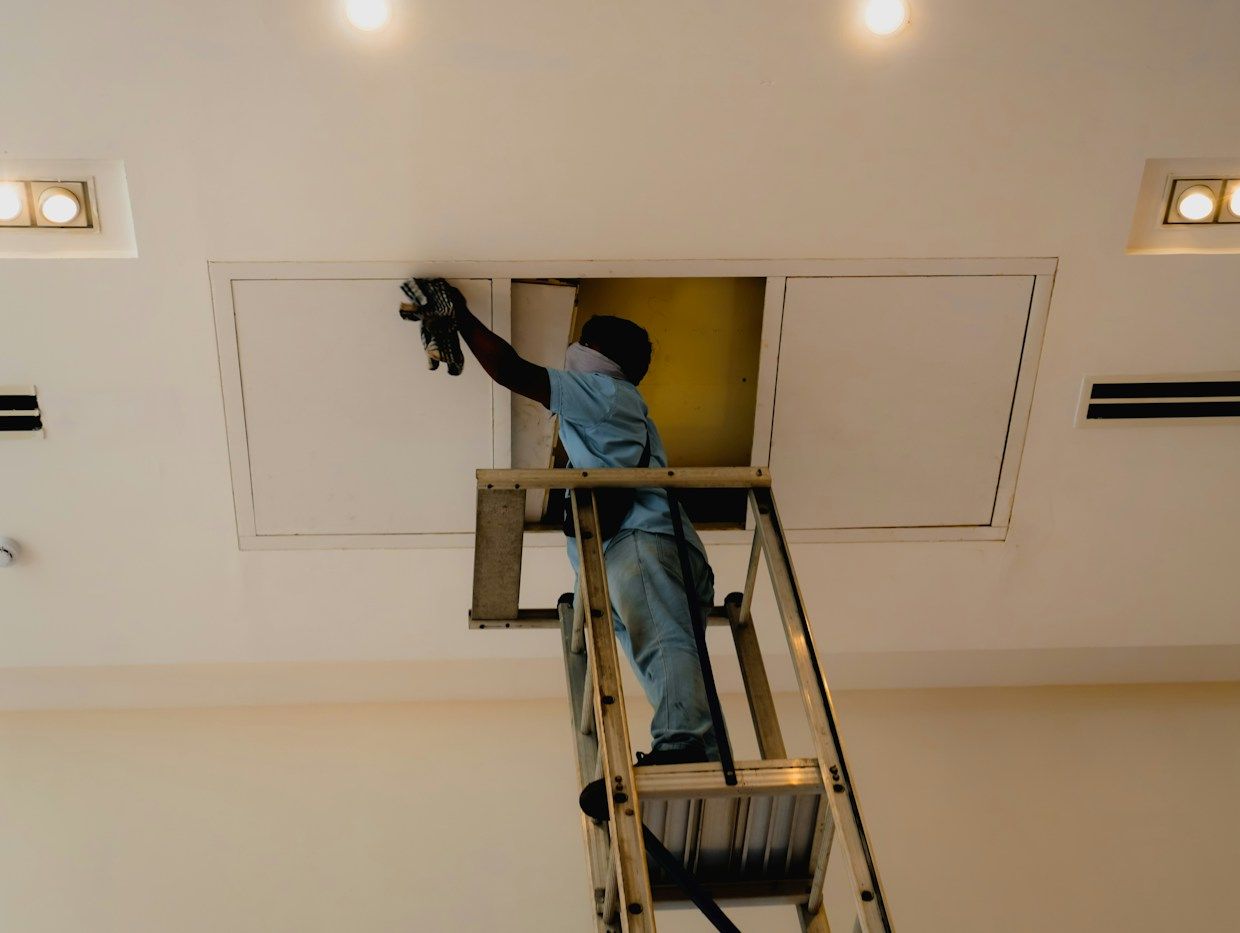
Estimate a ceiling repair by area
Typical prices per sq ft for Fort Wayne jobs, from the source below. Your quote follows a look at the job.
| Type | Per sq ft |
|---|---|
| Replace damaged board | $5 to $6 |
| Hang new ceiling board, no finishing | $3 to $3 |
| New texture | $1 to $2 |
| Skim coat | $1 to $1 |
$494 to $601
Call (260) 352-5780 for your priceAt a glance
| Item | Typical figure | Source |
|---|---|---|
| One crack or hole | $383 to $463 a visit | Homewyse, zip 46802, 2026 |
| Ceiling repairs nationally | $350 to $1,500 or more | HomeGuide, 2026 (national) |
| New ceiling board, hung only | $2.73 to $3.28 each sq ft | Homewyse, zip 46802, 2026 |
| Each coat of compound | 12+ hours to dry | HomeGuide, 2026 (national) |
| Houses old enough for plaster | 15.5% built 1939 or earlier | Census ACS 2024 |
| Newer houses, often trussed | 14.4% built 2000 or later | Census ACS 2024 |
Ceiling Repair by What You See Overhead
Each of these looks like one problem from the floor. Each one gets a different fix.
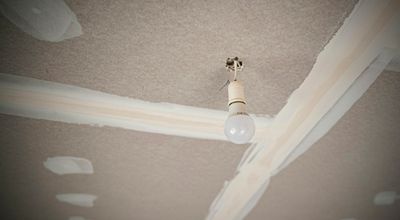
Straight Cracks Along Seams
A crack running straight and repeating about every 4 feet follows the sheet joints, since board comes 4 feet wide. That points to failed tape in an otherwise sound ceiling. More compound won't hold. We cut out what's loose and bed new tape.

Winter Gaps at Inside Walls
Insulation piled over a truss's bottom chord keeps it warmer and damper than the top chords. It swells and has one way to go, which is up, and the ceiling goes with it. That gap comes back after any re-taping, so read the decision below.
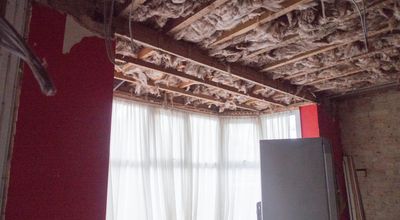
Bowed Board Between Joists
Hold a 4-foot level across the joists to see how deep the dip runs. A shallow belly in dry board can sometimes be pulled back tight. Deep or soft? It comes down.
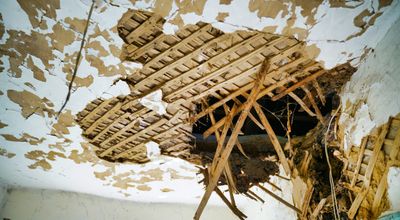
Missed Steps in the Attic
A boot between joists leaves a ragged hole and bent edges around it. We square the opening to the framing, push the insulation back, and screw in a piece that sits flush with the old board.
When Should You Worry About a Ceiling Crack?
Whether you should worry about a ceiling crack depends on a few different things. If there is a dip beside the crack, this could be potential water damage. You should also worry about a crack if there is any type of brown discoloration around its edge. It’s also a worry if the crack keeps growing over time. There could be several issues going on, and it needs to be looked at right away. If one side of the drywall is lower, this means the board let go and would need to be re-screwed into the ceiling. If it’s just a flat hairline crack, it’s usually cosmetic. It comes from the wood moving around during hot and cold seasons.
A crack with water behind it is a different job, and water damage drywall repair starts with the roof or the pipe.
Or send us the pictures, and we can tell you from the get-go if you can fix it or not.
How Cracked and Sagging Ceilings Get Fixed
- Read the pattern. We ask the year, then look at the line and what’s above it.
- Open it up. Loose tape gets cut away. Soft board goes back to framing, and the sound board around it gets new screws.
- Back every edge. A new piece lands on joists, or on a wood strip where the side has none.
- Coat and wait. Setting compound goes first, then wider coats, with at least 12 hours between them.
- Finish the whole surface. The patch gets primed and textured, then the full ceiling gets paint so one square doesn’t read brighter.
Spot Repair or New Board Across the Room?
Past about 60% of the surface, new board beats chasing cracks. Firm plaster overhead gives you a third choice, since new board screwed through to the joists skips the tear-out and its dust.
The choice between spot repairs and hanging new board across the whole room comes down to how much money you want to spend. Spot repairs are cheaper, but they can sometimes come back, so more spot repairs would be needed in the future. Hanging new board can be a lot more money but should fix the problem for good.
Cover the Winter Gap or Let It Float?
Crown molding fastened to the ceiling only, never the wall, hides the gap and rides up with it. Floating the corner means opening it and pulling fasteners roughly 18 inches back from the wall. Ceiling crack and truss uplift repair is a common issue in this area, since we have cold winters and warm summers. Trusses can bow up in the cold and make cracks in the ceiling that can cause an owner to worry about the structure, but it’s mostly just cosmetic, as the house is fine. Fixing these cracks can be pretty temporary, whereas letting the ceiling float is a more permanent solution most of the time.
How Much Does Ceiling Repair Cost in Fort Wayne?
One crack or hole usually costs from $383 up to $463 here, whichever it is, since a single visit carries the same labor minimum.
| Job | Low | High |
|---|---|---|
| One crack or hole, one visit | $383 | $463 |
| Replace damaged board, per sq ft | $4.94 | $6.01 |
| Hang new ceiling board, per sq ft | $2.73 | $3.28 |
| Tape new joints, per foot of joint | $1.22 | $1.48 |
| New texture, per sq ft | $1.25 | $1.52 |
| Skim coat, per sq ft | $1.12 | $1.33 |
These rows use zip 46802 pricing from November 2026, paint not included.
What affects the price
Every job is quoted after we see it. These are the things that move the number up or down.
How many spots
One visit carries a labor minimum, so list every crack in the house at once.
Height and access
Stairs and vaulted rooms need staging first.
Paint
Repainting the whole ceiling costs more than the patch and shows less.
Get a quote on your ceiling repair
Tell us that, the room, and what you see. A phone photo helps. The call back starts with the likely cause and a first cost range for that kind of repair.
Ceiling Repair FAQs
Why does my ceiling crack keep coming back after a repair?
If a crack keeps coming back after repair, it could be loose seams or a ceiling truss that lifts each winter. Adding new compound only hides the crack. The cause has to be found and fixed.
How long does a ceiling repair take?
A small hole takes 1 to 2 hours of work, spread over more than one day.
Will the repaired spot show on my ceiling?
Low afternoon light finds the edges, so we feather the base coats wide before any texture goes on.
Does a ceiling repair include repainting?
Often not, so ask. We list paint apart from the patch and the texture.
Can I fix a ceiling crack myself?
Yes, for a hairline crack in a closet or garage ceiling, most homeowners can handle this repair. If it's a long or wide crack, you should call someone who knows how to repair it.
Are ceiling cracks structural?
Seam cracks and winter gaps are cosmetic. A crack running on down a wall, with a door that started sticking, points past drywall, and we would send you to a structural engineer.
Request a quote
Phone (260) 352-5780 and describe the damage, or write down what the wall or ceiling is doing and we will ring you.